The best baker on your street is held back by one thing: almost nobody knows they're there. Word of mouth carries a home kitchen about as far as a person can walk, and then it stops. Their ceiling has never had anything to do with how well they bake.
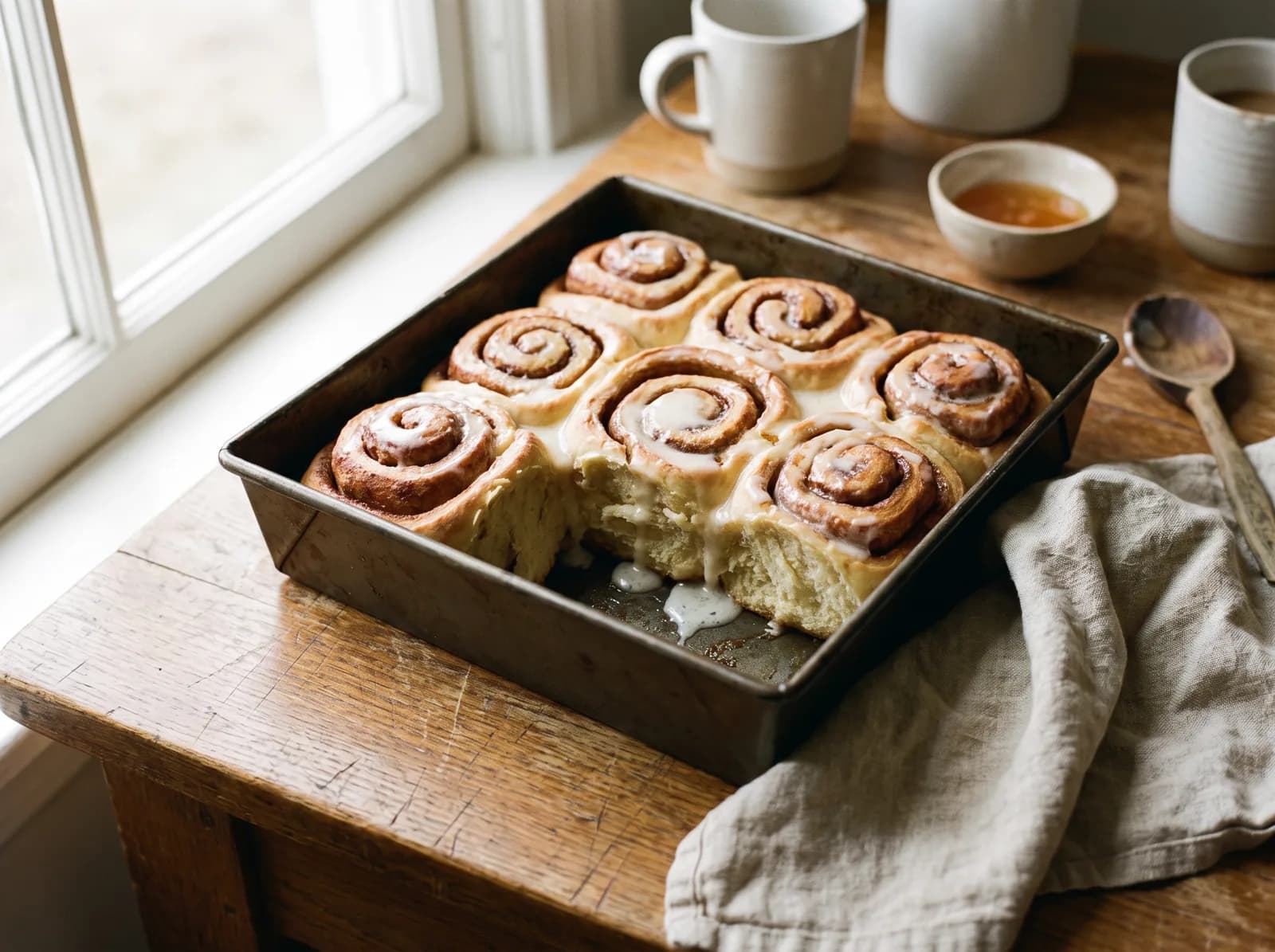
Our Papa had that same ceiling. He baked cinnamon rolls every weekend, and they reached exactly as far as a few kids could carry them before the first bell. Cottage & Kin is the counter he never had.
the ceiling was never the baking
The gap we're filling
Everything that isn't baking is our job.
Nobody starts baking because they wanted to run a small business. They wanted to bake and be paid for it, and the gap between those two things is wider than it looks. Sitting in it: an order confirmed somewhere in a comment thread, a payment that's still coming on Friday, a label that has to satisfy a state statute, and an hour spent working out what Arizona law says about frosting. A company solves all of that once and moves on. A baker at a kitchen table solves it again every Saturday, at ten at night, by themselves.
So we solved it once, in one place, for everybody. They post what they're baking this week and set their own prices. We carry the rest of it, permanently. That's what a counter is: the part of the business they never have to build.
Cottage & Kin handles
Their storefront, their photos, and their listings
Orders, pickup windows, and the reminders on both sides
Payment, payout, and refunds when something goes wrong
The statutory label for every batch, built from the same data as the listing
Registration and food handler card reminders, long before either expires
The baker handles
The baking.
That's the whole list, and we mean to keep it that short.
How we build
Put the law in the code.
Home baking is legal in Arizona because of a specific exemption in state law, and the exemption arrives with duties attached. We decided early that those duties belong in the software rather than in a page of terms, because a rule that only lives in a document gets broken by a busy person on a Saturday, and the person who loses their registration over it is the baker.
That decision shows up in four places in the product itself, and the first two cost us orders.
01
There's no override flag.
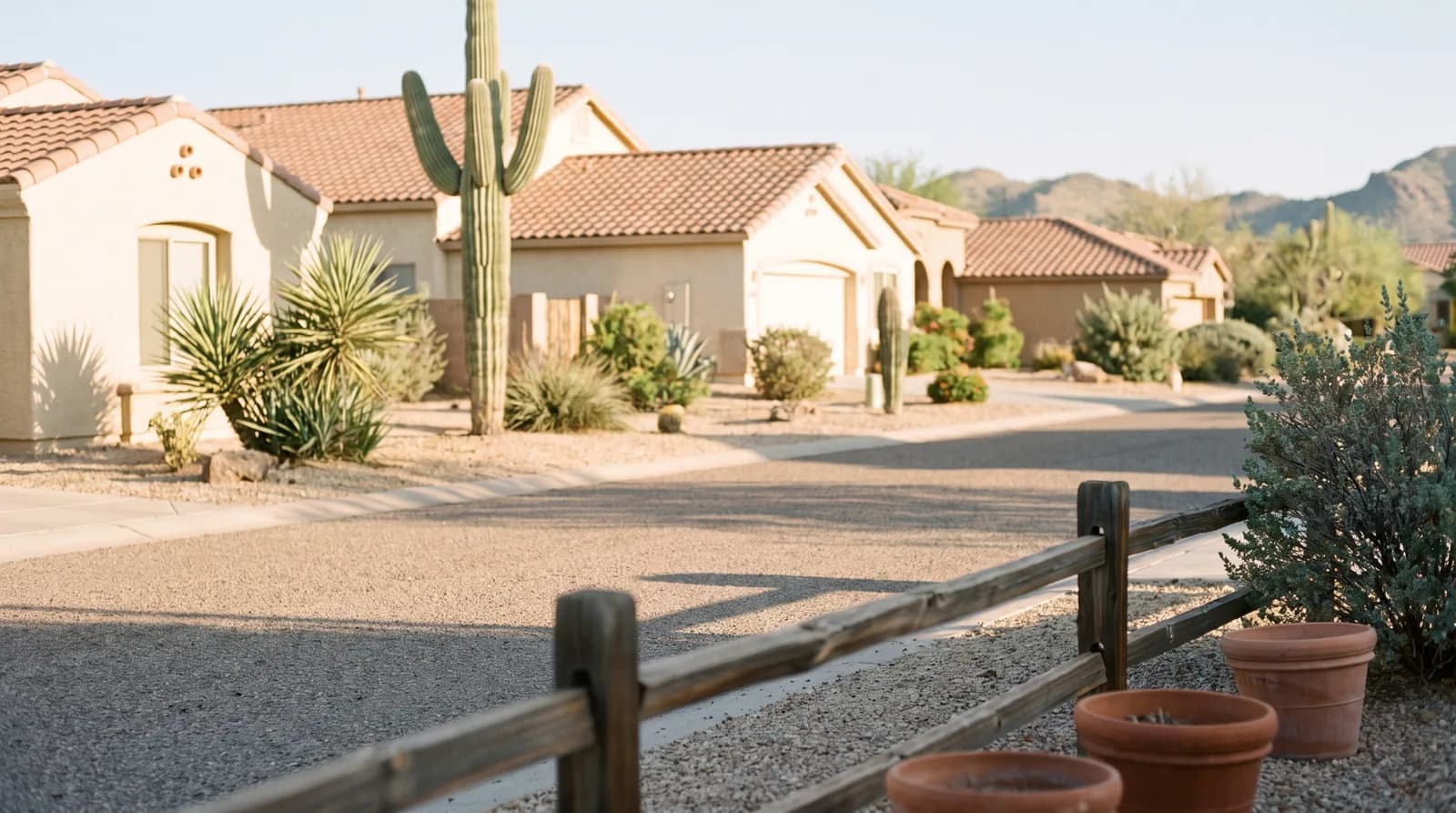
A registered Arizona preparer can sell and deliver inside Arizona, so checkout turns down an address outside the state. We didn't build an admin bypass for it, because the first people who'd reach for one are us, on the day somebody's grandma in Florida wants a box at Christmas.
02
Their ingredients decide how the box travels.
Arizona lets a baker sell dairy, meat and poultry over the internet and then requires them to put those into the buyer's hands in person. So the software reads what they declared and sets the handoff from it: a cheesecake can be collected from them or driven over by them, and it can never be handed to a courier. We had this wrong on the site for months, in the direction that would have cost them the best thing on their menu.
03
Two expiry dates, watched by the software.
Their registration with the Arizona Department of Health Services and their food handler card both run out, and the day either one does, the exemption goes with it. We store both dates as real fields, warn them at 60 days and again at 30, and take their listings down automatically if one lapses. Nobody has to remember.
04
Every batch carries its own date.
The production date belongs to the batch they baked on Saturday, not to the recipe. That's an odd thing to build, and it's the reason an ordinary shop database doesn't fit here. It also means their label prints from the same fields as their listing, so the sticker on the box and the page you read can't drift apart.
And nobody inspects their kitchen. Arizona cottage food is exempt from that by statute, the label on every order says so out loud, and so do we. What we can tell you is their name and their state registration number, that their food handler card is current and their product liability insurance is in force, what went into the thing you're about to eat, and the day it came out of their oven.
Where the money goes
Keep the money a few streets from home.
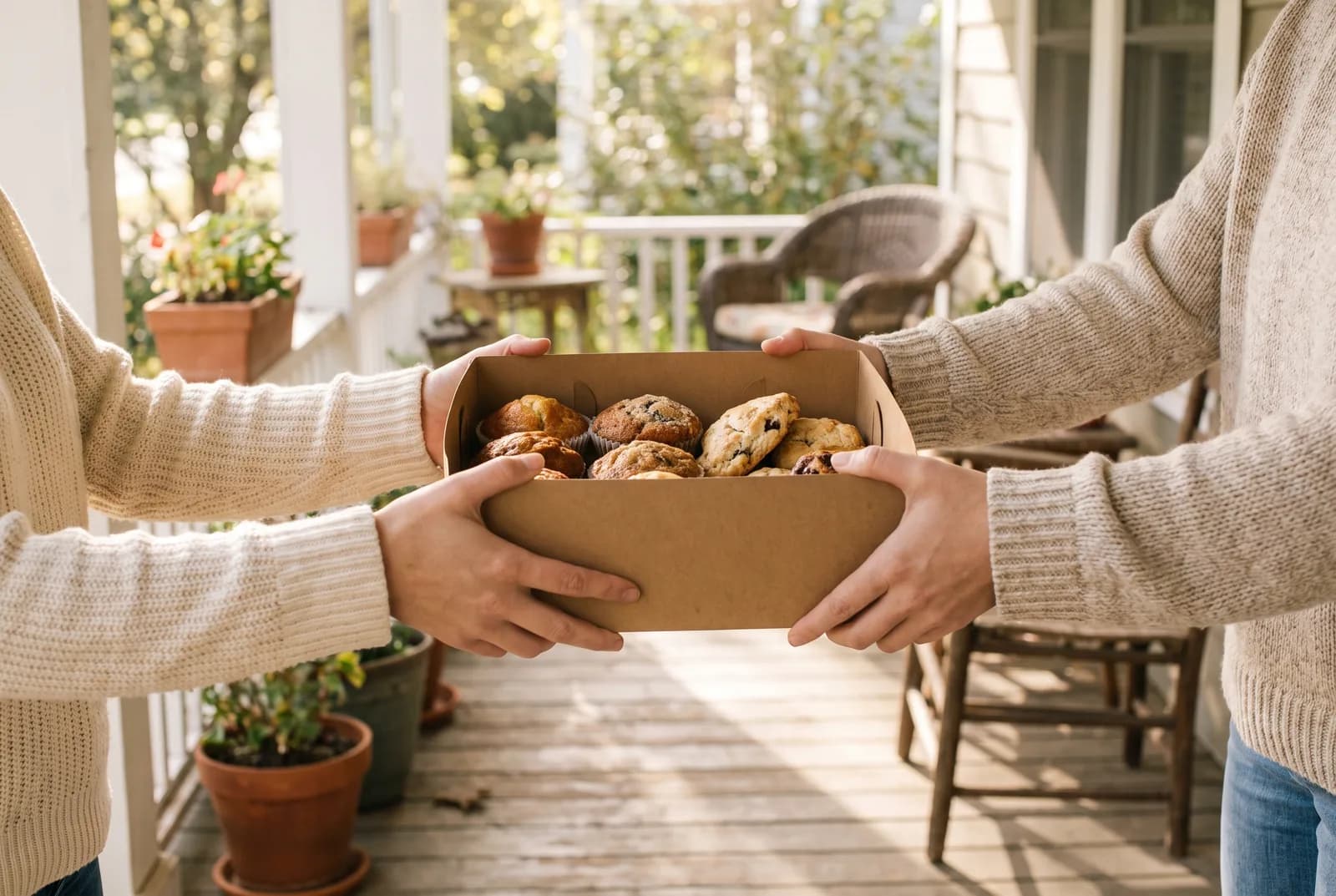
Buying from a neighbor is a different act from buying from a company. You're handing money to a person whose kitchen you could walk to, and it stays in the neighborhood. There's no warehouse in the middle of this and there never will be, partly because Arizona doesn't allow one and mostly because it was never the idea. They hand the box to you at their door, they drive it to yours, or you meet somewhere in between.
The price on the listing is the price you pay, and nothing gets added at the last screen. Our fee is charged on your side and folded into that one number instead of itemised under it. A fee that appears at checkout teaches both sides to do the next one in a parking lot and cut us out entirely, and the baker is the one who then loses the order record, the reviews, and any recourse when something goes wrong.
We take 5.5% of their price plus a flat 55 cents, and only when they sell. Card processing is Stripe's standard 2.9% plus 30 cents, it comes out of their side the way it does for any shop with a card reader, and none of it reaches us.
They set $40, and they keep
$38.46
Our $2.75 goes on top of their price, so the listing reads $42.75 and that's what you pay. Stripe takes $1.54 out of their side for the card. That's every deduction there is, printed here so you can check the arithmetic yourself.
Two ways in
Find a kitchen, or open one.
Look through the bakes
See how a kitchen presents itself here: the batch, the production date, the ingredients, and the baker's own words about what they make. The makers on the site today are prototype examples, standing in until real Phoenix bakers sign up.
If you already bake for people who pay you, you're most of the way there. Three things have to be in place before you sell: an Arizona cottage food registration, a current food handler card, and product liability insurance. The state requires the first two and we require the third. Start anyway if you have none of them, and we'll show you what to get and in what order.